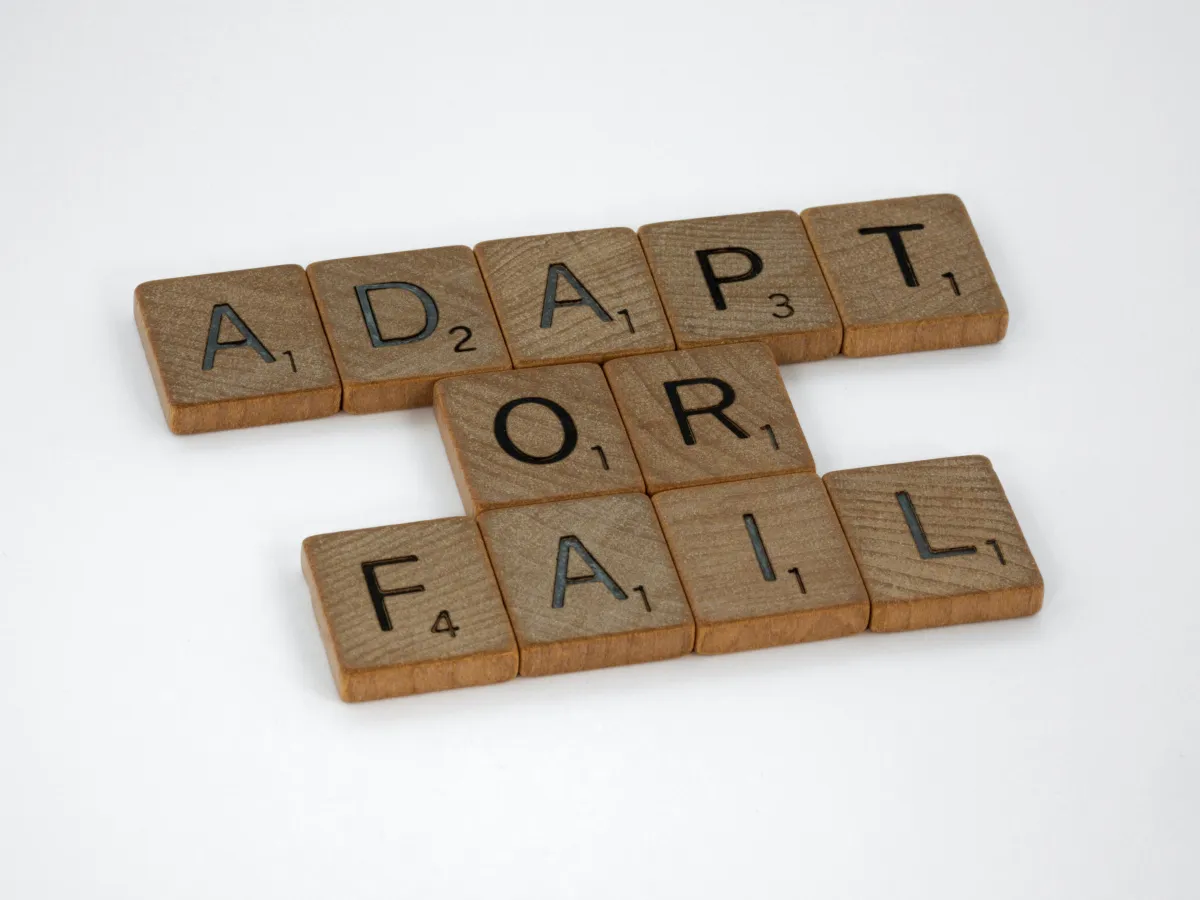
Adapt or fail? – When to adapt and when not.
Adaptability – is it beneficial or not?
We humans can be tremendously adaptable. I notice this every time I travel to a different country or even continent, to a completely different culture or climate.
We can learn foreign languages, and through it, literally start thinking differently as we use them. We can adapt to previously unknown ways of living, get used to hitherto unfamiliar foods and customs, and to different time zones. We change our behavior so it best fits our new environment, but not without losing ourselves and who we authentically are.
This doesn’t mean we have to adopt just anything we encounter along the way. We have a choice. We take what we like. We leave the rest.
When I first moved abroad – that was to Madrid, Spain – I was surprised by how much of people’s life happened in the streets, and especially at night; how late the Spaniards ate lunch and dinner. Of course, no none stopped me from eating in my own time. I usually just eat when I’m hungry, unless breaks and options to get food are dictated by work schedules that I agreed to and I failed to prepare for it by bringing food. Back then, in my job, breaks were very much the exception anyway… I mostly just ordered food in as I wanted to save time to get out of the office at a halfway decent hour at night. But I did adapt to late dinners out with friends, for sure… and dancing through the nights on weekends. In fact, one of the hardest times to get a taxi was 4-5am… Such was life in Madrid!
One thing I didn’t adapt to was smoking in the grocery store (even though I still was addicted to cigarettes back then – so glad I was able to free myself from it later!): People were smoking while waiting at the cheese or meat counter. I thought that was gross, so I wouldn’t do it. Funny how later Spain became one of the first European countries to ban smoking in office buildings…
Brazil, Argentina, US, wherever I moved to (or traveled to as frequently as to Portugal), there were things, customs, and behaviors I appreciated, and others I rejected. The same is true of any other place I’ve ever visited, be it Cameroon, Honduras, Qatar, Colombia, Cuba, Sweden, Beliz, Thailand, or any of the other many countries I’ve been blessed to set foot on. Each of them had its charm and its downside. Because we live in a world of duality. And we have choices. We have predilections and affinities on the one hand, and dislikes and aversions on the other. We approve and we disapprove. It’s part of being human.
The same applies to work. We will find circumstances, activities, and people we like, others we dislike and some we’re indifferent to. Each job has more and less exciting tasks and challenges. We adapt to its requirements, and we change what is not worth adapting to, or if that’s not within our authority, we ask to have it changed. If it’s something that matters deeply to us and we run into wall with our request, for example because this change is something that’s essential to the job, then this moving on to a different role may be worth consideration.
I would argue that most people are “too adaptable,” which easily slips into a lack of questioning or excessive compliance. We have seen this very clearly in recent times, and under certain circumstances, too much adaptability can be fatal.
So, the first rule always is: Ask yourself whether adapting is right for you in a specific situation or whether it’s just more comfortable (which is usually of short duration). While adaptability is an ability (adapt-ability), it can also be a weakness. It all depends on the context.
We always have two basic options: adapt or not adapt. These then branch out into endless sub-options. Because as humans we have endless possibilities inside of us, and there are unlimited possibilities waiting for us out there.
PS: Also watch out for an upcoming article about adaptability and authenticity. Should be interesting!